6. The Call of Abraham (Genesis 12)
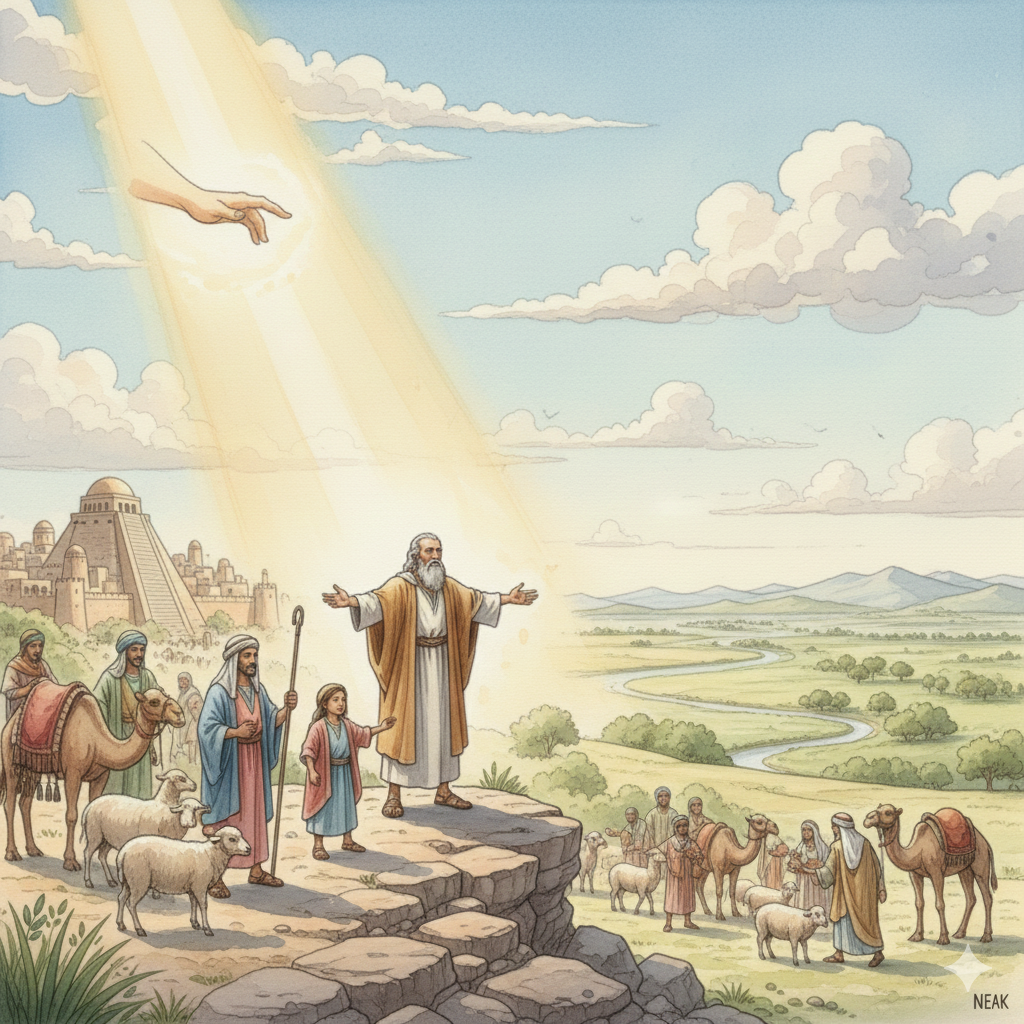
After centuries of human dispersion following the chaos of Babel, the history of salvation takes a decisive turn with a man named Abram, whom God would later name Abraham. While living in Haran, surrounded by his family and his securities, Abraham heard a voice that would change the course of the world: "Go forth from your land and your kinsfolk to a land that I will show you." This was not a simple order to relocate, but an invitation to an adventure of total trust. God did not show him the whole map or the final destination; He only asked him to take the first step based on a promise: "I will make of you a great nation... all the families of the earth will find blessing in you."
Abraham, who was already an old man and had no children with his wife Sarah, could have doubted. However, the Bible tells us that "Abram went as the Lord directed him." This act of obedience makes him the "Father of Faith." His faith was not just believing that God existed, but trusting in God's Word even when circumstances seemed impossible. Leaving his land meant abandoning the protection of his family gods and his wealth to depend exclusively on an invisible God who called him personally.
This call marks the beginning of the "Chosen People." Through Abraham, God begins His rescue plan for all humanity. The blessing God promises is not just for him; it is intended to reach every corner of the world. Abraham becomes a channel of divine grace, teaching us that when God calls someone, He does so for the sake of many others. His journey toward Canaan is the journey of every believer who dares to leave their own securities to follow God's will toward a future full of hope.
Key Points according to the Bible
- Divine Election: God takes the initiative to seek out man to restore lost friendship.
- Faith as a Path: Believing implies setting out; it is not just an internal feeling, but an action.
- The Triple Promise: God promises Abraham a land, a great descendants, and a universal blessing.
- Renunciation: To receive the new things of God, one must often be willing to let go of what is already known.
Biblical Text
Consult the full biblical text of Abraham's call here: USCCB - Genesis Chapter 12
Reflection Activities: Genesis 12
| 1. Text Comprehension: What three things did Abraham have to leave behind, and what was the main promise God made to him? |
| 2. Doctrinal Content: Why is Abraham called the "Father of Faith," and how does his faith differ from simple intellectual belief? |
| 3. Catechetical Application: In what ways can you be a "blessing" to the people around you today, following Abraham's example? |